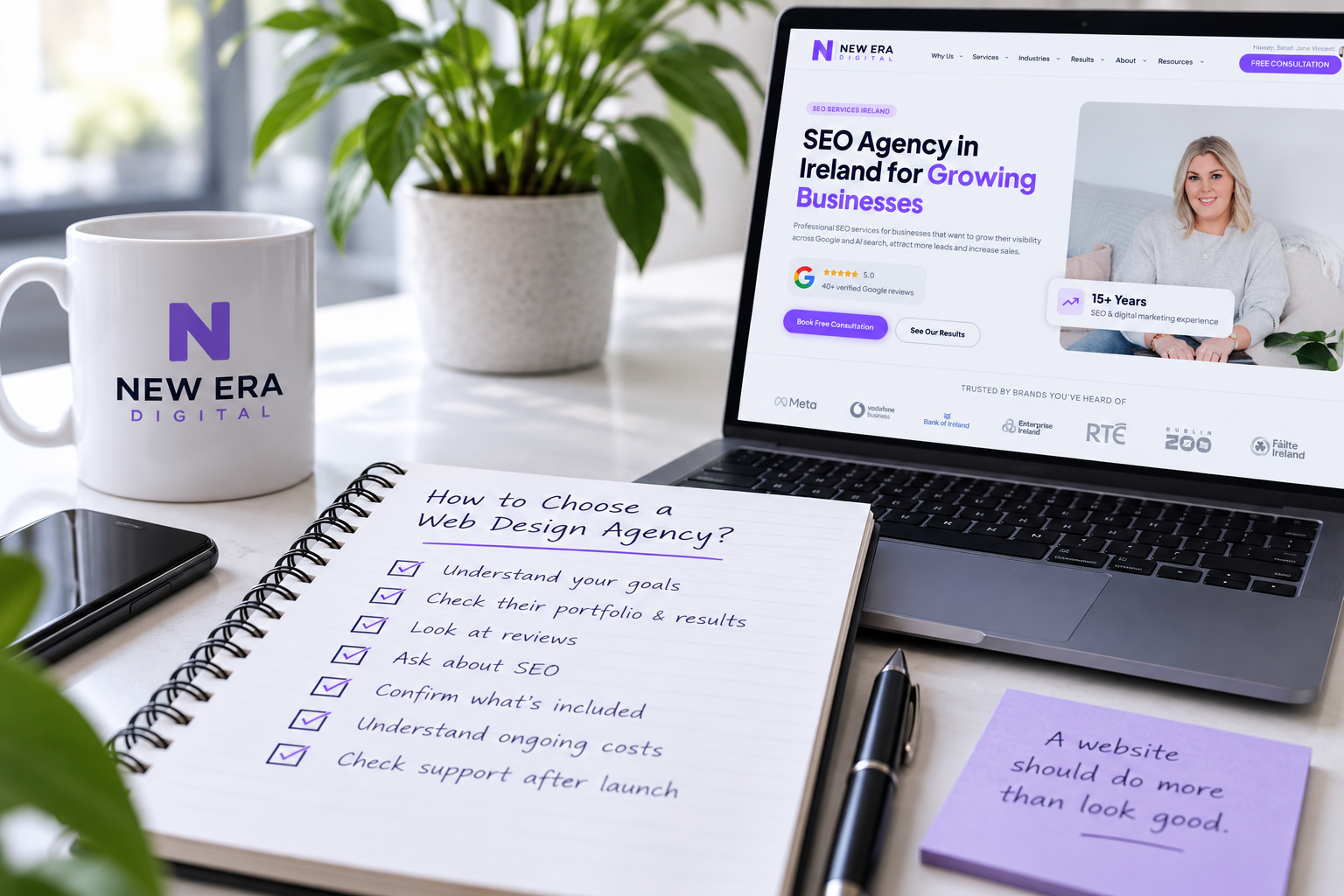
Choosing a web design agency can be surprisingly difficult.
Most agencies have polished websites. Most will show you attractive portfolios. And almost everyone will tell you they build fast, responsive, SEO-friendly websites.
So how do you actually tell which agency is right for your business?
For me, good web design starts long before anyone chooses colours, fonts or page layouts. Your website needs to support what you’re trying to achieve as a business — whether that’s generating enquiries, selling products, attracting bookings or increasing your visibility in search.
If you’re comparing web design agencies in Ireland, here are 10 things I’d check before making your decision.
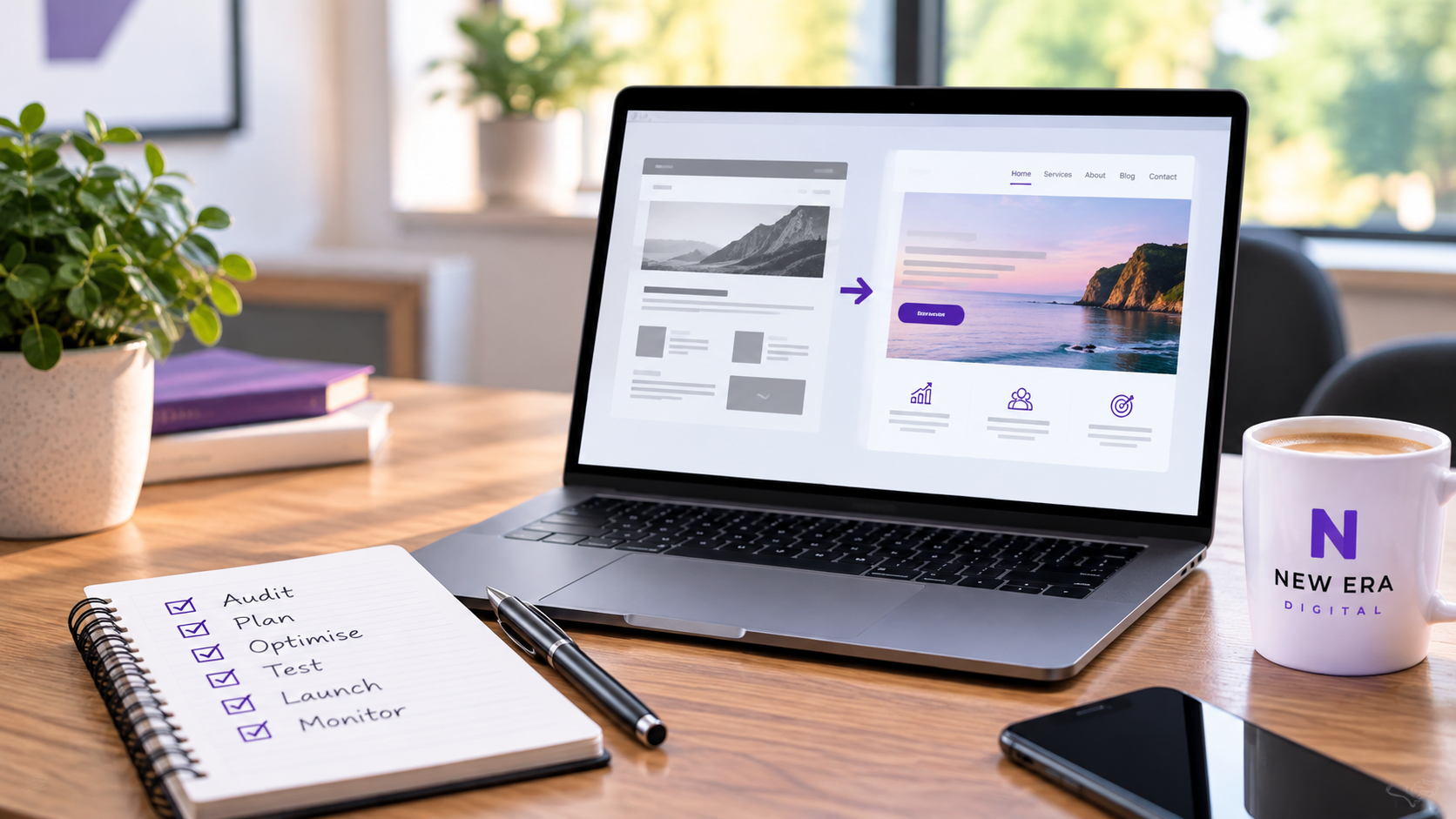
Quick Web Design Agency Checklist
If you’re shortlisting agencies, this is where I’d start:
| What to check | What you’re looking for |
|---|---|
| Business understanding | They ask about your goals, customers and what the website needs to achieve |
| Portfolio & case studies | Live websites backed by outcomes, not just attractive screenshots |
| Client reviews | Consistent feedback about communication, reliability and results |
| SEO knowledge | SEO considered during planning, design and development |
| Website migration | A clear plan for protecting existing rankings and traffic |
| Platform choice | WordPress, Shopify or another CMS recommended for a reason |
| Project scope | Clear inclusions, exclusions, revisions and responsibilities |
| Ownership | You know who owns the website, domain and important accounts |
| Ongoing costs | Hosting, maintenance, licences, plugins and apps are transparent |
| Tracking | Analytics and important conversions are measured |
| Aftercare | Clear training, support and maintenance arrangements |
Now let’s look at each of these in more detail.
1. Start With What You Need Your Website to Achieve
Before comparing agencies, get clear on why you’re investing in the website in the first place.
You don’t necessarily need a detailed technical specification. But you should know what’s not working now and what you want the new website to improve.
That might be:
- generating more enquiries
- increasing online sales
- improving your Google visibility
- making the website easier to use
- improving conversion rates
- supporting Google Ads campaigns
- introducing online bookings
- repositioning your brand
- making the site easier for your team to manage
- replacing an outdated website
This also gives you a much better way of assessing agencies.
Instead of asking:
“Can you build me a new website?”
you can ask:
“How would you approach building a website that generates more qualified enquiries?”
That’s a very different conversation.
2. Don’t Just Look at Their Portfolio — Look at the Results
Of course you should look at an agency’s previous websites.
But don’t stop at screenshots.
A beautiful website isn’t necessarily an effective website.
When I’m assessing a website project, I’m interested in what happens after it launches.
Did organic visibility improve?
Did enquiries increase?
Did customers find it easier to buy?
Did conversion rates improve?
Did the website solve the problem it was commissioned to solve?
Look for case studies rather than portfolios alone.
For example, our work with Straffan Self Storage involved website design alongside UX/CRO, SEO, Local SEO and Google Ads. The objective wasn’t simply to modernise the site — it was to make it easier for customers to enquire and reserve storage units online.
You can see more examples on our New Era Digital case studies page.
3. Check Their Reviews — But Read Them Properly
Reviews are another useful way of evaluating an agency, but don’t just compare star ratings.
Read what clients actually say.
Look for recurring comments about:
- communication
- reliability
- results
- responsiveness
- understanding the client’s business
- problem solving
- support
- meeting expectations
Also look at how recent the reviews are and whether they describe actual projects.
Reviews matter beyond Google Maps
This has become more interesting as people increasingly use AI-powered search tools to discover businesses.
Someone might not search:
“web design agency Ireland”
They could instead ask an AI assistant:
“Who can redesign my website and has good reviews?”
That means your wider online reputation, website content and third-party references increasingly form part of how your business can be discovered and understood across modern search experiences.
Google itself now provides specific guidance around visibility in generative AI search experiences while continuing to emphasise that established SEO foundations remain important.
4. Find Out How Much They Actually Understand About SEO
This is a big one for me.
A website can look fantastic and still create serious SEO problems.
Google recommends building sites that are secure, fast, accessible, work across devices and can be properly understood by its search systems.
So ask the agency:
How is SEO considered during the website project?
The answer should go further than:
“We’ll install an SEO plugin.”
Depending on the project, I’d expect consideration of:
- keyword research
- website architecture
- navigation
- page targeting
- URL structure
- headings
- content
- metadata
- internal linking
- crawlability and indexation
- page speed
- mobile usability
- structured data where appropriate
- analytics
- Google Search Console
Google’s own Search Essentials also recommends using the language people search for in prominent locations such as page titles and headings, while ensuring internal links are crawlable.
Not every web designer needs to be an SEO specialist.
But if organic search is an important source of business for you, somebody involved in the project should understand SEO properly.
You can see how we combine the two on our Website Design Ireland page.
5. If You’re Redesigning an Existing Website, Ask About SEO Migration
This deserves its own point because redesigning an existing website is very different from launching your first one.
If your current website already receives organic traffic, has rankings or has earned backlinks, those assets need to be considered during the redesign.
Don’t simply ask:
“Will my new website be SEO friendly?”
Ask:
“How will you protect my existing SEO when the new website launches?”
I’d expect an SEO-conscious redesign process to consider:
- existing rankings
- organic landing pages
- current URLs
- backlinks
- existing content
- URL mapping
- 301 redirects
- internal links
- canonicals
- crawlability
- XML sitemaps
- analytics
- Google Search Console
- post-launch monitoring
Google recommends creating a mapping between old and new URLs when URLs change, implementing permanent redirects and submitting the new sitemap in Search Console. It also notes that search visibility can fluctuate temporarily while Google processes a migration.
Google recommends keeping redirects in place for at least a year after a site move.
This is why SEO shouldn’t be something you think about after the new website has gone live.
Related guide: Website Redesign SEO Checklist
6. Pay Attention to the Questions the Agency Asks You
This is one of the easiest ways to tell whether you’re having a strategic conversation or simply being sold a website.
A good agency should want to understand your business.
I’d expect questions such as:
Who are your customers?
What are your most important products or services?
How do people currently find you?
What’s not working with your existing website?
What does a conversion look like for your business?
Which pages currently generate traffic or leads?
Who are your competitors?
What systems does the website need to integrate with?
Who will manage the website after launch?
If most of the conversation is about what colours you like and which competitor’s website you want to copy, I’d want to dig deeper.
The agency needs to understand the business problem before proposing the website solution.
7. Understand Exactly What’s Included in the Quote
Two website quotes can look similar while including completely different things.
Before comparing prices, find out what’s actually included.
Depending on the project, that might include:
- strategy and planning
- sitemap/site architecture
- wireframes
- design
- development
- content writing
- content migration
- SEO
- e-commerce setup
- analytics
- conversion tracking
- forms
- integrations
- redirects
- testing
- training
- hosting
- software licences
- post-launch support
And ask what’s not included.
For example, don’t assume a website redesign automatically includes a full SEO migration unless that’s explicitly stated in the scope.
Don’t Compare Website Quotes on Price Alone
Imagine you receive these two proposals:
Quote A – €3,000 Quote B – €4,500 Website design & development Website design & development Basic page setup SEO-informed site architecture Client supplies all content Content optimisation included No SEO migration URL mapping & redirects included Basic contact form Conversion tracking configured No CMS training CMS training included No post-launch support Post-launch checks & support
On price alone, Quote A looks cheaper.
But they’re not actually quoting for the same project.
This is why I recommend comparing scope against scope, rather than simply choosing the lowest figure.
A detailed proposal isn’t unnecessary bureaucracy. It protects both you and the agency from having completely different expectations about what the project includes.
8. Ask Why They’re Recommending a Particular Platform
You shouldn’t necessarily have to decide which CMS your website needs before speaking to an agency.
But the agency should be able to explain why they’re recommending one.
At New Era Digital, for example, we work with WordPress, Shopify and Squarespace.
I’d look at:
- what you’re selling
- e-commerce requirements
- content requirements
- SEO
- integrations
- custom functionality
- who will manage the website
- maintenance requirements
- future plans
If an agency only builds on one platform, that’s not automatically a problem.
But I’d still ask:
“Why is this platform the right choice for my business?”
The answer should be about your requirements rather than what’s easiest for the agency.
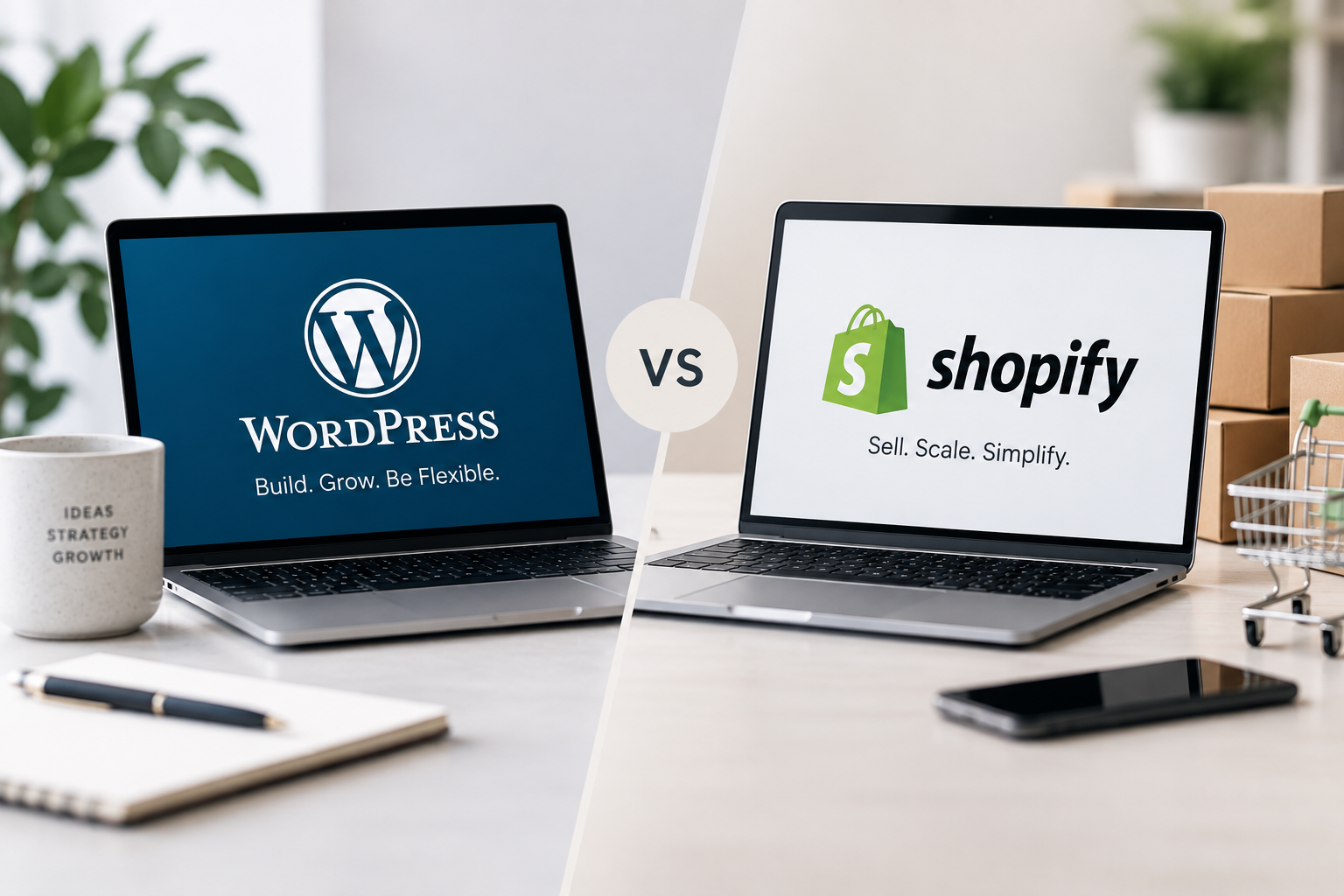
Related guide: WordPress vs Shopify: Which Is Better for Your Business?
9. Clarify Ownership, Hosting and Ongoing Costs
This is one of those boring questions that becomes extremely important when something goes wrong.
Before signing anything, understand who owns or controls:
- your domain
- hosting account
- website
- content
- Google Analytics
- Google Search Console
- Google Tag Manager
- plugins
- themes
- software licences
- images and other assets
Where practical, I prefer clients to have appropriate ownership or access to important business accounts rather than everything living inside an agency-owned account.
You should also understand the ongoing costs.
Depending on the website, these might include:
- hosting
- maintenance
- premium plugins
- Shopify apps
- software licences
- security
- development support
Ask what you’ll still be paying for after the website invoice has been paid.
That’s the figure that matters over the lifetime of the website.
10. Ask What Happens After the Website Goes Live
Launch day isn’t the end of a website project.
It’s the beginning of having a new website.
Before choosing an agency, ask what happens afterwards.
Will you receive training?
Can you update the site yourself?
What happens if something breaks?
Who handles updates?
Is maintenance available?
Who monitors SEO?
Will analytics and conversion tracking be checked?
Can the agency continue helping as the business grows?
For me, one of the most important post-launch checks is data.
You should be able to understand whether the new website is actually doing its job.
That means having the right tracking in place for whatever matters to your business — enquiries, calls, purchases, bookings, downloads or other meaningful conversions.
Otherwise you can end up six months down the road knowing your new website looks better, but having no idea whether it performs better.
Does Your Web Design Agency Need to Be Local?
Not necessarily.
If you’re based in Wexford, you don’t automatically need a Wexford web designer.
Likewise, a business in Dublin, Kildare, Waterford or Limerick doesn’t necessarily need an agency around the corner.
Being able to meet face-to-face can certainly be useful.
But I’d prioritise:
- relevant experience
- communication
- understanding of your market
- process
- strategic expertise
- reliability
- results
Most website projects can be managed effectively through video calls, email and project-management systems.
For an Irish business, there can still be advantages to working with an agency that understands the Irish market — particularly around search behaviour, local SEO, .ie domains, VAT and e-commerce.
But fit matters more than distance.
12 Questions to Ask a Web Design Agency Before Hiring Them
☐ What would you recommend for my website and why?
☐ Have you worked on similar businesses or requirements before?
☐ Can you show me live websites and relevant case studies?
☐ How do you incorporate SEO into the website build?
☐ How will you protect my existing rankings and traffic?
☐ Why are you recommending this CMS or platform?
☐ What’s included — and specifically excluded — from the quote?
☐ Who will actually work on my project?
☐ Who owns the website, domain and associated accounts?
☐ What ongoing costs should I expect?
☐ What support will I receive after launch?
☐ How will we measure whether the new website has been successful?
You don’t necessarily need a perfect answer to every question.
What you’re looking for is clarity.
If you’re getting vague answers before you’ve paid a deposit, they’re unlikely to become clearer once the project starts.
Web Design Agency Red Flags to Watch For
A few things would make me investigate further before committing.
No clear scope of work
You should understand what you’re buying.
No live examples or case studies
Screenshots are easy. Look at real websites and, ideally, evidence of what those projects achieved.
They barely ask about your business
The project shouldn’t start and finish with design.
SEO is treated as an afterthought
This is particularly dangerous if you’re redesigning an existing site with established rankings and traffic.
You don’t know who owns the website
Clarify ownership before the project begins.
Ongoing costs are unclear
Ask about hosting, licences, maintenance, plugins and apps.
There’s no measurement plan
A new website should have a purpose and a way of measuring whether it’s achieving it.
They guarantee a #1 Google ranking
Nobody can guarantee a particular Google ranking. Google’s own SEO Starter Guide explicitly states that there are no secrets that will automatically rank a website first.
Compare Your Shortlisted Web Design Agencies
Once you’ve spoken to two or three agencies, use something like this to compare them:
| What matters | Agency 1 | Agency 2 | Agency 3 |
|---|---|---|---|
| Understands our business goals | ☐ | ☐ | ☐ |
| Strong relevant case studies | ☐ | ☐ | ☐ |
| Good independent reviews | ☐ | ☐ | ☐ |
| SEO considered during planning | ☐ | ☐ | ☐ |
| SEO migration covered | ☐ | ☐ | ☐ |
| Clear project scope | ☐ | ☐ | ☐ |
| Platform recommendation explained | ☐ | ☐ | ☐ |
| Ownership clearly defined | ☐ | ☐ | ☐ |
| Ongoing costs transparent | ☐ | ☐ | ☐ |
| Tracking included | ☐ | ☐ | ☐ |
| Post-launch support explained | ☐ | ☐ | ☐ |
Don’t simply count the ticks.
Some factors will matter considerably more to your business than others.
For example, if organic search currently generates a large percentage of your leads or sales, the agency’s SEO and migration experience should carry much more weight than whether they’re located 10 minutes from your office.
What I Look at Before Recommending a Website Redesign
Something else worth saying: not every business needs a new website.
Sometimes an existing website has a perfectly good foundation but needs:
- better SEO
- clearer navigation
- stronger service pages
- improved conversion paths
- better content
- faster performance
- updated design
- better tracking
In those situations, improving the existing website may make more commercial sense than starting again.
That’s why I prefer looking at the website as part of the wider digital strategy rather than assuming a redesign is automatically the answer.
If the existing website can do the job with the right improvements, I’d rather say that.
How Much Should You Pay a Web Design Agency in Ireland?
There isn’t one standard price.
A straightforward small-business website and a large e-commerce project with bespoke functionality aren’t comparable projects.
The cost will depend on things such as:
- number and type of pages
- bespoke design
- content
- SEO
- e-commerce
- functionality
- integrations
- migration requirements
- development complexity
Choosing the Right Web Design Agency for Your Business
The agency with the fanciest portfolio isn’t necessarily the right agency for you.
And neither is automatically the cheapest, biggest or closest.
Look for a team that understands what the website needs to achieve, can explain its recommendations clearly and has a sensible plan covering everything from SEO and UX through to tracking and what happens after launch.
Most importantly, you should understand what you’re getting and why you’re getting it.
At New Era Digital, we approach website design through the same lens we use for SEO and digital strategy: the website needs to do more than look good. It needs to support visibility, usability, conversions and the wider goals of the business.
You can explore our Website Design Ireland services or get in touch to discuss your project.
FAQs About Choosing a Web Design Agency
What should I look for when choosing a web design agency?
Look beyond the agency’s portfolio. Consider its case studies, reviews, understanding of your business, SEO knowledge, project process, platform recommendations, ownership arrangements, ongoing costs and post-launch support.
How many web design agencies should I speak to?
For most small businesses, speaking to two or three well-matched agencies should give you enough information to compare approaches, scope and costs without turning the process into a tender exercise.
Should SEO be included in website design?
SEO should at least be considered during the website planning and build if organic visibility matters to your business.
Website structure, content, URLs, internal linking, crawlability and technical implementation can all affect how search engines understand the finished website. Google’s guidance specifically recommends making sites easy for search engines to crawl, index and understand.
The extent of the SEO work included will vary by agency and project, so check the scope rather than assuming it’s included.
Should I choose a freelancer or web design agency?
Neither is automatically better.
A freelancer may be an excellent choice for some projects. An agency may offer a broader combination of design, development, SEO, content and ongoing support.
Compare the people, expertise and scope you’re actually getting, rather than making the decision based purely on whether they’re called a freelancer or agency.
Do I need a local web design agency?
No. Many website projects can be managed remotely.
Relevant experience, communication, process and understanding of your business are usually more important than physical distance.
Should I choose WordPress or Shopify?
It depends on the business.
WordPress is often a strong choice for service and content-led websites, while Shopify is designed specifically around commerce. The right platform depends on what you’re selling, how the website will be managed, your SEO/content requirements and the functionality you need.
Read our WordPress vs Shopify guide for the full comparison.